

Big productions are built for big budgets, with segmented crews where most people can’t contribute ideas. A small, collaborative team moves faster, shares ideas freely, and scales up only when the budget calls for it. For local businesses, that usually means more value and a closer relationship.
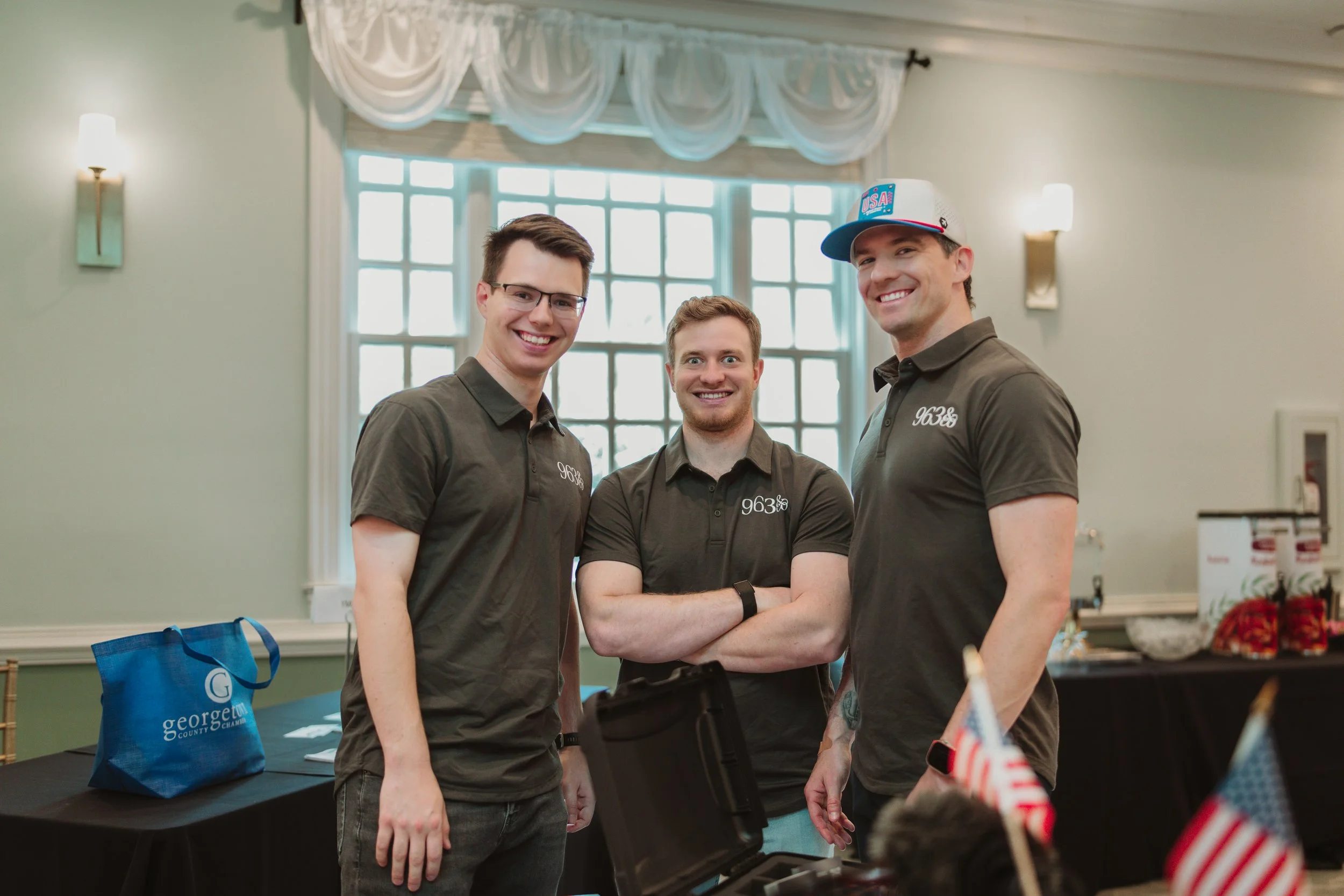
Myrtle Beach is a different kind of market for video production.
We’re surrounded by bigger creative hubs. Charleston is to the south, Wilmington to the north, and Charlotte isn’t far away. Here, the creative community is smaller, and a lot of the businesses are niche and tourism-driven.
Most of the businesses we work with don’t have Hollywood budgets. Some projects run into the hundreds of thousands of dollars, but most don’t. That reality shaped how we built our team.
Here’s why we think a small, collaborative crew is often the better fit for local businesses.
Big sets are built for big budgets
Large commercial and film sets are impressive. There’s nothing wrong with them. But they’re built a certain way.
They’re extremely segmented. The director, the director of photography, and the producer make the creative calls. Everyone else has a very specific lane.
If a grip or a camera assistant notices something that could look great, there’s usually no room to say, “Hey, let’s try this real quick.” That’s not how those sets work.
That structure makes sense when there’s a big budget and a big crew. It doesn’t make sense for most small businesses.
Collaboration gets more out of every shoot day
Our sets work differently. Communication runs in every direction.
If someone sees a better angle, a better moment, or a fresh idea, they speak up. We try it. If it works, great. If it doesn’t, we move on.
That collaboration does two things. First, it makes the content better, because good ideas can come from anyone. Second, it lets us move fast.
When a team communicates well, clients get a lot more for their budget. More shots, more usable content, and less time wasted waiting on decisions to work their way up a chain of command.
For a small business, that’s huge. Every hour of shoot day counts.
Scale up only when it makes sense
A smaller core team doesn’t mean we can’t handle big projects. It means we scale up when the budget and the project actually call for it.
For a local business with a modest budget, a tight crew is often the right move. For a larger campaign, we bring on more crew, more talent, and more gear.
That flexibility lets us serve businesses from the low end of the spectrum up to bigger brands. Clients pay for what their project actually needs, not for a crew size built for someone else’s budget.
We also know we’re not the right fit for every budget, and that’s okay. There are plenty of talented creatives in our area who can help businesses that are just getting started. Every story is worth telling, and the important thing is that it gets told.
Creative and marketing can’t be walled off
In a market like ours, we’ve found it’s hard to separate making the content from marketing it. The two have to work together.
A great-looking video that doesn’t support a business goal isn’t much help. So we think about both from the start. What is this content for? Where will it run? How will it help the business grow?
Our goal isn’t just to make something pretty. It’s to build tools that help clients grow on their own, with content and systems they can keep using.
Is a small team the right fit for you?
A small, collaborative crew isn’t the answer for every project. Here’s a quick way to think about it.
A tight team is usually a great fit if you:
Are a local or regional business with a focused budget
Want a lot of usable content from a single shoot day
Value working directly with the people making your content
Plan to create content regularly, not just once
A bigger crew might make more sense if you:
Have a large national campaign with complex logistics
Need multiple locations, big casts, or heavy effects in a short window
Have a budget built for a full production department
The right production partner will tell you honestly which camp you’re in, and adjust the crew to match, instead of selling you more than you need.
A tighter community means better relationships
There’s an upside to a smaller market. You get to know the people you work with.
A lot of creatives in this area rely on the big shoots that come to town every so often. We took a different route by focusing on local businesses year-round. That gives us more consistent work, and it gives our clients a team that actually knows them.
It feels less like a vendor relationship and more like family. We’re working with people we see around town, whose businesses we care about. That closeness makes the work better, too.
Key takeaways
Big, segmented sets suit big budgets, not most local businesses.
Collaborative crews share ideas freely and move faster on shoot day.
A small core team can scale up when a project’s budget calls for it.
Creative and marketing work best together, especially for small businesses.
In a tight-knit market, closer client relationships lead to better work.
FAQ
How big should a video crew be for a small business? It depends on the project, but many small business shoots work best with a tight, experienced crew. Bigger crews make sense for larger budgets and more complex productions.
Why choose a local video production company? A local team understands your market, can build a closer working relationship, and is easier to work with on an ongoing basis.
Can a small video team handle large projects? Yes, when they can scale up crew and gear as needed. Ask any production company how they adjust for bigger projects.
What makes a video shoot more cost-effective? Strong planning, a collaborative crew, and a team that moves efficiently on shoot day all help you get more content for the same budget.
Let’s talk about your project
Whether your budget is modest or you’re planning something big, we’d love to hear what you’re working on. Grab a coffee with us and we’ll show you how we’d make the most of it.